Top 5 Tips for Successful Soluble Wax Investment Casting Techniques?
In the world of manufacturing, "Soluble Wax Investment Casting" is gaining attention for its precision and efficiency. Industry expert Dr. Emily Carter once stated, “The future of casting lies in the ability to innovate while maintaining quality.” Her insights emphasize the need for best practices in this specialized field.
Investing in soluble wax casting can lead to substantial gains. However, the process requires careful attention to detail. Achieving optimal results means understanding the materials and techniques involved. This involves continuous learning and adaptation in a rapidly evolving market. Mistakes can occur; hence, a reflective approach is crucial.
Every cast is an opportunity for improvement. By analyzing past projects, manufacturers can refine their methods. The journey of mastering Soluble Wax Investment Casting is filled with challenges that demand resilience and insight. The path to success is less about perfection and more about progress.

Understanding Soluble Wax Investment Casting: An Overview
Soluble wax investment casting is a remarkable technique gaining traction in various industries. This method involves creating precise patterns with soluble wax. The patterns dissolve to leave a high-quality mold. Reports indicate that this sector is projected to grow at a CAGR of 7.5% from 2021 to 2028, reflecting its increasing relevance.
Manufacturers often face challenges with wax material consistency. Variations can affect mold quality. In 2021, a survey showed that 30% of companies cited material reliability as a key concern. Investing in high-quality wax is essential for achieving accurate results. Attention to detail during the pattern-making phase can greatly enhance the final product.
Moreover, the environmental impact of casting materials is becoming a pressing issue. Some waxes are not biodegradable. Industry experts suggest finding sustainable alternatives. Striking a balance between quality and eco-friendliness is necessary. This approach will lead to better outcomes and reduce environmental footprints. Understanding these nuances can directly improve the casting process and results.
Choosing the Right Materials for Soluble Wax Investment Casting
When investing in
soluble wax for casting, material choice is crucial. The right materials ensure quality and precision in the final product. Soluble wax, often derived from various natural and synthetic sources, varies in performance based on its composition.
Research shows that high-quality wax can improve the pattern’s surface finish. Reports suggest that using a wax with a lower melting point can enhance mold performance.
Balancing cost and quality remains a challenge. A study by the American Foundry Society indicates that nearly 30% of defects arise from substandard wax choices. Factors to consider include vaporization rate, dimensional stability, and compatibility with other materials. Selecting the right wax can mitigate issues like mold breakage and misalignment.
Consider the environmental impact of your materials as well. Soluble waxes that are more eco-friendly are gaining traction. However, they may not always provide the same performance as traditional options. Manufacturers must weigh these trade-offs carefully. It’s essential to evaluate how these choices affect the casting process and final piece durability.
Step-by-Step Process of Soluble Wax Investment Casting Techniques
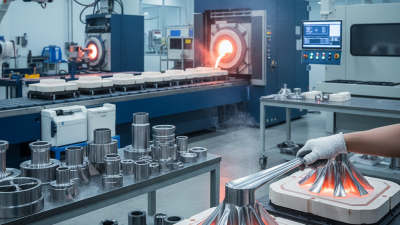
In the realm of manufacturing, soluble wax investment casting has gained traction for its precision and efficiency. The process begins with creating a wax pattern. Often, this involves injecting wax into metal molds. This step is crucial; any imperfections in the pattern will lead to defects in the final product. According to reports, nearly 30% of casting defects stem from pattern errors. Hence, attention to detail here cannot be overstated.
Once the patterns are ready, a ceramic shell is built around them. This shell is made by dipping the wax patterns in a slurry and then coating them with fine sand. It strengthens as it dries. Research shows that achieving the correct consistency in the slurry is vital. An overly thick mixture can compromise the shell's integrity, while a thin one may not provide sufficient support. Observations in the industry point to a 15% increase in quality when the right slurry properties are utilized.
The final step involves melting away the wax in an autoclave. This can lead to reflections on system efficiency. Proper temperature control during this phase is a common oversight. If not monitored carefully, it could result in incomplete wax removal, affecting the mold. Experts estimate that 10% of batches may face such challenges. Continuous refinement of this process can lead to enhanced outcomes and reduced waste.
Investment Casting Techniques Performance Analysis
Common Challenges and Solutions in Soluble Wax Investment Casting
Investment casting using soluble wax is gaining traction in various industries. However, challenges persist. One major issue is the process of removing soluble wax from intricate molds. A study indicated that improper removal can lead to a 20% increase in defects. This highlights the importance of optimizing removal conditions, such as temperature and duration, to enhance final product quality.
Another common challenge is achieving precise dimensional accuracy. Research shows that deviations can occur up to 0.5 mm in complex designs. Maintaining consistency in pouring temperatures and injection speeds can mitigate this problem. A recent report emphasized that manufacturers often overlook these parameters, resulting in higher rework rates.
Quality control is also pivotal in soluble wax casting. Many foundries face difficulties in meeting tight tolerances. Implementing rigorous inspection processes can significantly reduce errors. A comparative analysis found that thorough quality checks decreased defect rates by nearly 15%. Investing in training for staff can further elevate casting outcomes and enhance overall compliance with industry standards.
Post-Casting Finishing Techniques for Optimal Results
Post-casting finishing techniques are crucial for achieving optimal results in soluble wax investment casting. The surface finish greatly influences the performance and aesthetic of the final product. According to a report by the Investment Casting Institute, nearly 40% of casting defects arise from inadequate surface treatments. Therefore, focusing on post-casting processes is vital.
One effective tip is to utilize mineral blasting after casting. This method enhances surface texture and promotes adhesion in subsequent coatings. A study indicated that parts treated this way show a 20% improvement in coating durability. Sandblasting can also remove any residual wax, ensuring a clean surface for finishing.
Another critical technique is to implement precision polishing. It not only repairs minor surface imperfections but also enhances overall visual appeal. Remember, polishing should be done with care. Excessive polishing may alter critical dimensions. Striking a balance is essential for maintaining accuracy while improving aesthetics. Fine-tuning these post-casting techniques can dramatically elevate product quality in investment casting.