Leave Your Message

What Is Lost Wax Steel Casting?

Lost Wax Steel Casting is an investment-casting process used to make detailed steel components. A wax pattern is formed, coated with ceramic, and heated until the wax drains away. Molten steel then fills the hardened mold. After cooling, workers remove the ceramic shell and finish the casting. The result can capture fine contours that are difficult to produce through many other casting methods.

Casting metallurgist and author John Campbell is often associated with the principle, “The quality of a casting is determined by the quality of the metal from which it is made.” The reminder applies here. A precise pattern cannot compensate for poor melt control, unsuitable steel, or a flawed pouring system. Engineers must consider the component’s shape, required properties, and production volume before choosing this method. Thin walls and intricate details can be made, but they demand careful design and process control.

This guide explains how Lost Wax Steel Casting works, where it is useful, and what its limitations are. It will cover pattern making, shell formation, melting, pouring, and finishing. Small details matter. So do practical trade-offs: ceramic shells require preparation, and complex castings may need inspection or additional machining. The process is capable, not magical. Even a well-planned casting can reveal defects that require review and improvement.
What Is Lost Wax Steel Casting?

What Lost-Wax Steel Casting Is

Lost-wax steel casting, also called investment casting, makes metal parts from disposable wax patterns. A wax model is coated with ceramic slurry and fine refractory grains until a hard shell forms. The wax is melted out, leaving a cavity. Molten steel then fills it. After cooling, workers break away the shell, remove gates, and inspect the casting. Small details matter: shell thickness, pouring temperature, and cooling rate can affect surface quality and dimensional accuracy.

It is precise, but not magic.

Thin sections may fill poorly, and shrinkage can still require design adjustments. The World Foundry Organization’s 2020 census reported 109.7 million tonnes of global casting production in 2019, showing the scale of the wider industry, not investment casting alone.

Grand View Research estimated the global investment-casting market at about US$17.66 billion in 2023 and forecast 5.8% annual growth through 2030. These figures describe market activity, not a guarantee that every part suits the process.

Engineers commonly choose lost-wax steel casting for complex shapes, internal passages, or features that would require extensive machining. The trade-off is real: ceramic shells and pattern preparation add time and cost.

Always. A prototype can expose problems before production.
How the Wax Pattern and Ceramic Mold Are Prepared

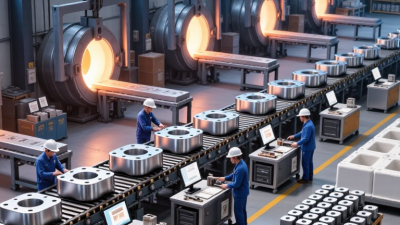
A wax pattern gives lost-wax steel casting its shape before any steel is poured. Molten wax is injected into a metal die, then allowed to cool until it holds its form. Technicians check thin walls, edges, and openings for dents or incomplete filling. Even a tiny defect can appear later in the metal part. The patterns are attached to a central wax runner, forming a tree that will carry molten steel into each cavity. The layout needs care. A crowded tree may restrict flow, while an unnecessarily large one wastes material. These choices are not always obvious from a drawing alone.

The wax assembly is dipped into ceramic slurry, then coated with fine sand or other refractory grains. Each layer must dry before the next is added; rushing can trap moisture or weaken the shell. Several coats build a mold thick enough to withstand heat and handling. Fine particles help capture surface detail, while coarser layers add strength. Once the shell has cured, heat melts out the wax, leaving a hollow cavity. The mold is then fired to remove remaining residue and prepare it for casting. Drying times vary with humidity and shell thickness, so a fixed schedule can be unreliable. A small crack may still escape notice. Careful inspection matters.

How Molten Steel Is Poured into the Mold

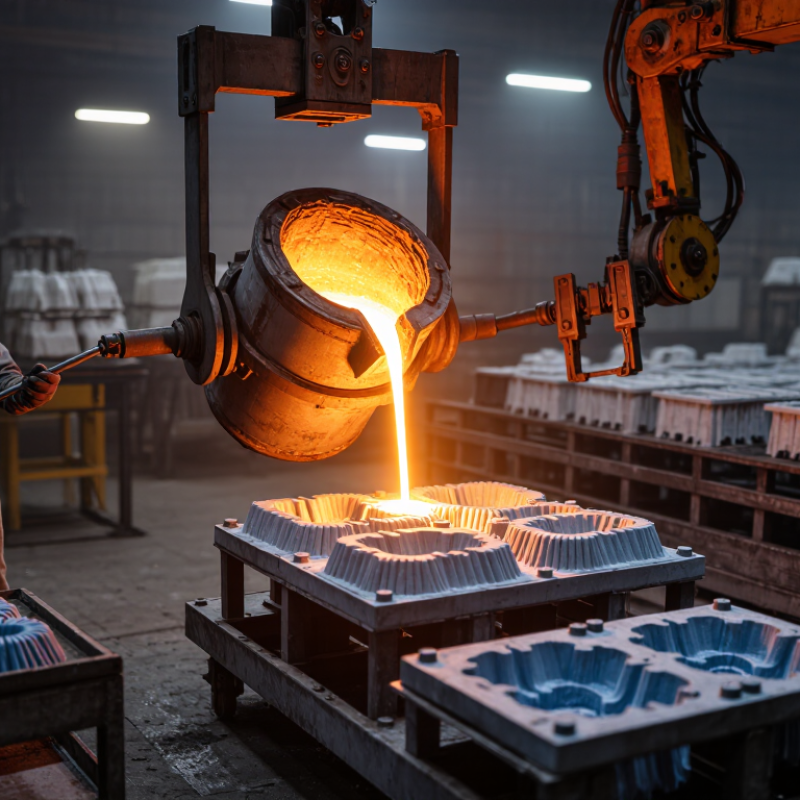
In lost-wax steel casting, molten metal meets a preheated ceramic shell rather than a reusable metal die. The shell’s temperature and the steel’s pouring temperature must suit the alloy and the casting’s wall thickness. A thin rib can freeze before a thick section fills. Timing matters. The pourer guides a steady stream from the ladle into the sprue, avoiding splashing that can draw oxides into the metal. Gates direct the flow; risers hold extra liquid steel to feed shrinkage as the casting cools. A brief pause may seem harmless, but it can interrupt flow and leave an incomplete section.

The scale of steel production makes process control consequential.

The World Steel Association’s World Steel in Figures 2024 reports 1,892.2 million tonnes of crude steel produced worldwide in 2023.
The International Energy Agency’s Iron and Steel Technology Roadmap (2020) estimates that steel production accounts for about 7% of global carbon dioxide emissions.

These figures describe the wider steel sector, not investment casting alone. Still, they underline why avoiding rejected pours matters. After pouring, the shell stays intact while the metal solidifies; workers then remove it and inspect the casting for flaws. In practice, temperature readings do not capture every change in flow. That gap deserves attention: operator judgment remains important, and it is not perfectly repeatable.

How the Casting Is Cooled, Removed, and Finished

What Is Lost Wax Steel Casting?
How the Casting Is Cooled, Removed, and Finished

Once molten steel fills the ceramic shell, cooling begins, but it is not simply a matter of waiting. Metal loses heat at different rates depending on wall thickness, shape, and surrounding shell. A thin rib may solidify before a heavy junction. Foundry teams manage cooling to reduce distortion and internal stress, but the right approach varies by part. Timing can be frustratingly variable.

After the casting cools enough to handle, workers remove the ceramic shell using vibration, impact, or other suitable methods. It breaks away in fragments, revealing a rough, dark surface. Not instantly. Workers cut off the gates and runners that carried steel into the mold, then grind the stubs flush. Care is needed: removing too much material can change important dimensions.

Finishing depends on how the part will be used. It may be heat-treated, cleaned by blasting, or machined where precise fits are required. Inspections can include visual checks and dimensional measurements; some parts need additional testing. A bright surface does not prove a casting is sound. Small marks may be harmless, while hidden defects require proper evaluation. There is judgment involved, and that deserves to be acknowledged.

Common Applications and Key Characteristics of Steel Castings

Lost-wax steel casting is useful when a component needs complex shapes, fine details, or internal passages that would be difficult to machine from solid stock. The process forms a wax pattern, coats it with ceramic, removes the wax, and pours molten steel into the shell. Small details matter. The result can reduce machining, though it does not eliminate it.

Common applications include pump and valve components, turbine parts, industrial machinery, and fittings used in demanding environments. These parts may face pressure, vibration, heat, or repeated wear. Steel offers useful strength and toughness, while alloy selection can improve corrosion or heat resistance. No single grade suits every service condition. A pump component exposed to a corrosive fluid, for example, needs a different material review than one handling clean water.

Casting quality depends on more than the pattern. Wall thickness, alloy chemistry, heat treatment, and inspection all affect the finished part. Designers should check likely shrinkage, machining allowances, and critical dimensions with the foundry before production. That step can prevent costly revisions. Lost-wax casting is not automatically the best choice: large, simple parts may be cheaper to make another way. The trade-off deserves a careful look.

What Is Lost Wax Steel Casting? Common Applications and Key Characteristics

Lost wax, or investment, casting forms steel parts from a wax pattern and a ceramic mold. It is used for components such as valves, pump parts, and other complex shapes. The chart compares minimum tensile strength requirements for ASTM A216 grades WCA, WCB, and WCC. These pressure-containing carbon steel grades are not specific to the lost wax process; actual properties depend on grade, heat treatment, and applicable specifications.

Source: ASTM A216/A216M, standard specification for steel castings suitable for fusion welding for high-temperature service. Values shown are minimum tensile strength requirements, converted from ksi to MPa.