What is Lost Wax Investment Casting and How Does It Work?
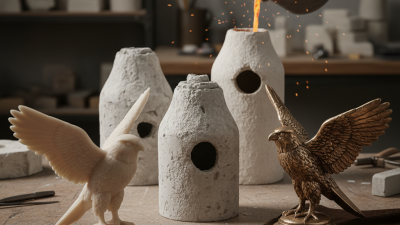
Lost Wax Investment Casting is an ancient technique used for creating intricate metal objects. It begins with a wax model. This model is coated in a ceramic shell. Once the shell hardens, the wax melts away. This leaves a detailed mold behind. Liquid metal is then poured into this mold.
The beauty of Lost Wax Investment Casting lies in its precision. Artists and engineers can produce complex shapes. Yet, the process does have its challenges. The craftsmanship must be perfect, or errors may emerge. Small flaws can lead to significant issues in the final product. Understanding this technique requires patience and practice.
In modern applications, Lost Wax Investment Casting plays a vital role. It is often used in jewelry making, aerospace, and art. Despite its advantages, it is not without flaws. Each production cycle must be managed carefully. The balance of art and technology is delicate. As we explore this fascinating process, we must reflect on its imperfections and potential.
What is Lost Wax Investment Casting?
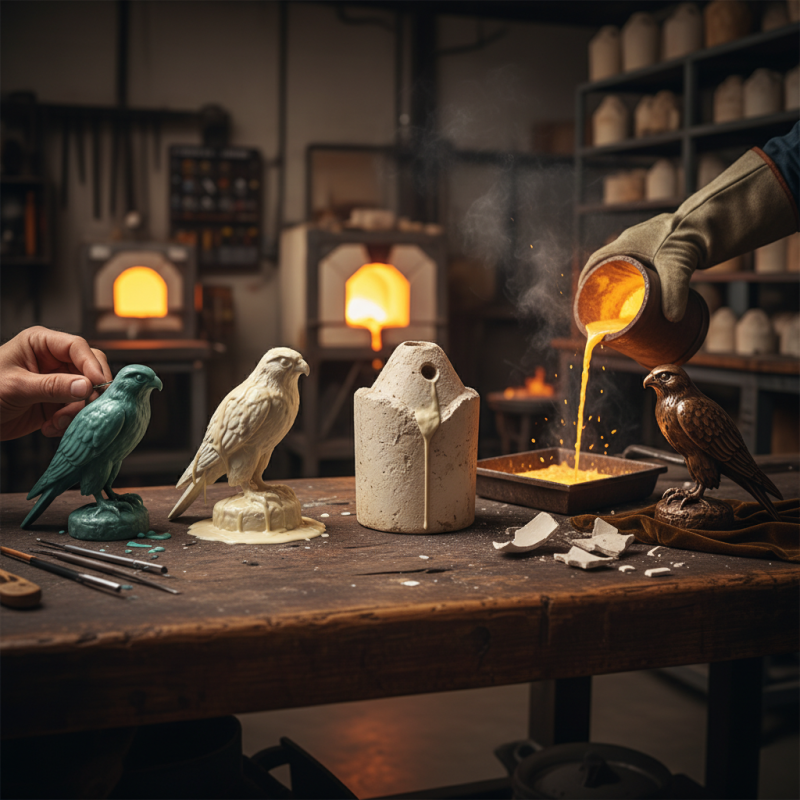
Lost Wax Investment Casting is a fascinating process. It allows for the creation of intricate metal objects. This method involves creating a wax model of the desired item. The model is then coated with a ceramic shell. Once the shell is set, the wax is melted away, leaving a hollow mold. Liquid metal is poured into this mold. After cooling, the ceramic is removed. This reveals the finished piece.
The precision of this technique is remarkable. It can produce complex shapes with fine details. Often, it's used for jewelry, sculpture, or industrial parts. The process provides a great surface finish, minimizing the need for additional machining. However, it's crucial to control temperatures accurately during melting and pouring.
Tips: When starting with this casting method, practice is essential. Consider experimenting with different wax types. Each type can influence the final product's detail and finish. Also, always prioritize safety while working with hot materials. Wear protective gear to avoid injuries. It's okay to face setbacks; learning from mistakes is part of the journey. Embracing imperfections can lead to unique results that stand out.
History and Development of Lost Wax Investment Casting
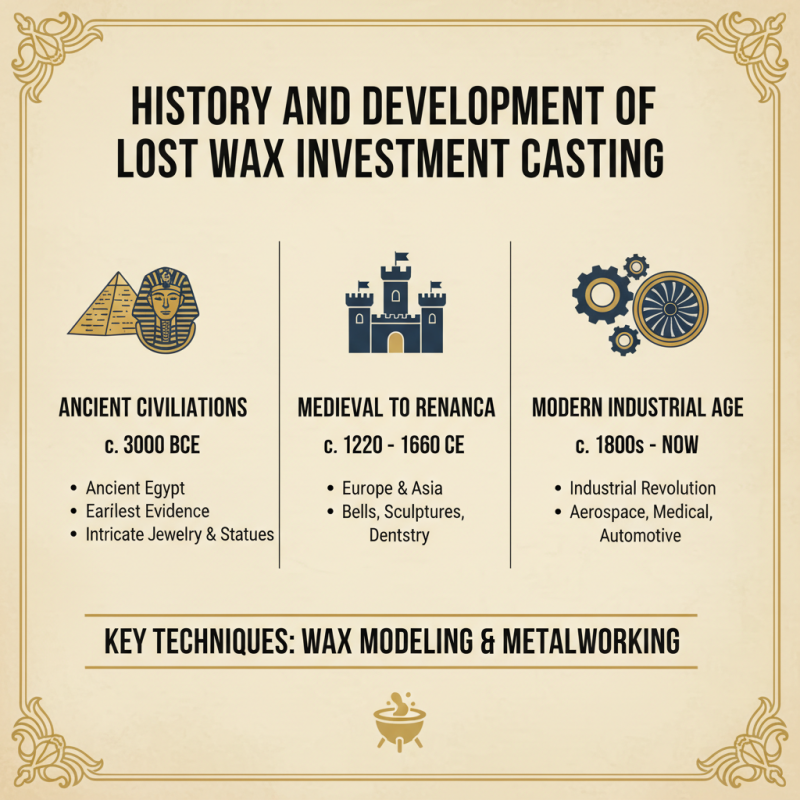
Lost wax investment casting, a fascinating technique, has a rich history. It dates back to ancient civilizations. The earliest evidence comes from the artisans of ancient Egypt. These skilled craftsmen used the method for creating intricate jewelry and statues. They mastered the art of wax modeling and metalworking.
Over centuries, different cultures adopted and adapted this technique. The ancient Greeks refined it for more complex designs. During the Renaissance, lost wax casting became popular in Europe. Artists utilized it to produce detailed sculptures. The process involves creating a wax model, encasing it in a mold, and melting away the wax.
Despite its effectiveness, the technique has its challenges. Achieving precision while maintaining dimensional accuracy can be difficult. Refining the process often requires trial and error. Small imperfections can lead to significant flaws in the final product. Innovators continue to improve this ancient art, blending tradition with modern technology.
The Process of Lost Wax Investment Casting: Step-by-Step Overview
Lost wax investment casting is a fascinating, intricate process that produces highly detailed metal parts. The journey begins with crafting a wax model. This model replicates the desired design exactly. It's essential for achieving precision in the final product. After creating the model, technicians inject it with a special ceramic material. This step needs attention to detail. The coating must be even to avoid defects.
Once the ceramic shell hardens, it is heated. During this step, the wax melts away, leaving a hollow mold. This crucial transition requires careful temperature control. If not managed properly, it can lead to imperfections. Afterward, molten metal is poured into the mold. The casting has to be done swiftly to ensure perfect filling. Any delay might cause incomplete designs.
After the metal cools, the ceramic shell is broken away, revealing the finished part. There is often room for improvement in this process. Each mold is unique, and small changes can create different results. Careful analysis of each casting is vital to refine techniques. The beauty of lost wax investment casting lies in its complexity. It offers a great blend of art and science.
What is Lost Wax Investment Casting and How Does It Work? - The Process of Lost Wax Investment Casting: Step-by-Step Overview
| Step |
Description |
Materials Used |
Key Considerations |
| 1 |
Create a wax pattern of the desired part. |
Wax |
Precision in design is crucial. |
| 2 |
Coat the wax model in a ceramic shell. |
Ceramic materials |
Ensure a smooth coating to prevent defects. |
| 3 |
Remove the wax pattern by heating. |
NA (wax is melted) |
Control temperature to prevent shell damage. |
| 4 |
Pour molten metal into the shell. |
Metal alloys (e.g., stainless steel) |
Pour at the right viscosity for uniform flow. |
| 5 |
Allow the metal to cool and solidify. |
NA |
Cooling rate influences final properties. |
| 6 |
Break away the ceramic shell. |
NA |
Handle castings carefully after shell removal. |
| 7 |
Finish the casting (cleaning, machining, etc.). |
Various finishing materials |
Surface finish affects aesthetics and performance. |
Materials Used in Lost Wax Investment Casting
Lost wax investment casting is a precise technique used for metal fabrication. One crucial aspect of this process is the materials involved. Typically, the molds are made from high-quality ceramic or other refractory materials. These allow for the fine details of the original model to be captured accurately. Various alloy materials are also used, which can significantly influence the properties of the final product.
According to industry reports, over 40% of the investment casting market relies on stainless steel alloys. These alloys provide excellent corrosion resistance. However, they can also be expensive, requiring careful cost management. On the other hand, non-ferrous metals like aluminum are popular for their light weight. Yet, they may not provide the durability required for some applications.
Another material worth mentioning is the wax itself. While it is removable, the quality of the wax impacts the final casting. If the wax does not melt correctly, defects may arise. More attention should be given to maintaining quality standards throughout the process. These aspects highlight the complexities faced by manufacturers, who must balance cost with quality and efficiency.
Lost Wax Investment Casting Process Analysis
This chart represents the percentages of different materials used in the lost wax investment casting process. The main materials typically utilized include stainless steel, brass, aluminum, and others, showcasing their relevance in this casting method.
Applications and Advantages of Lost Wax Investment Casting
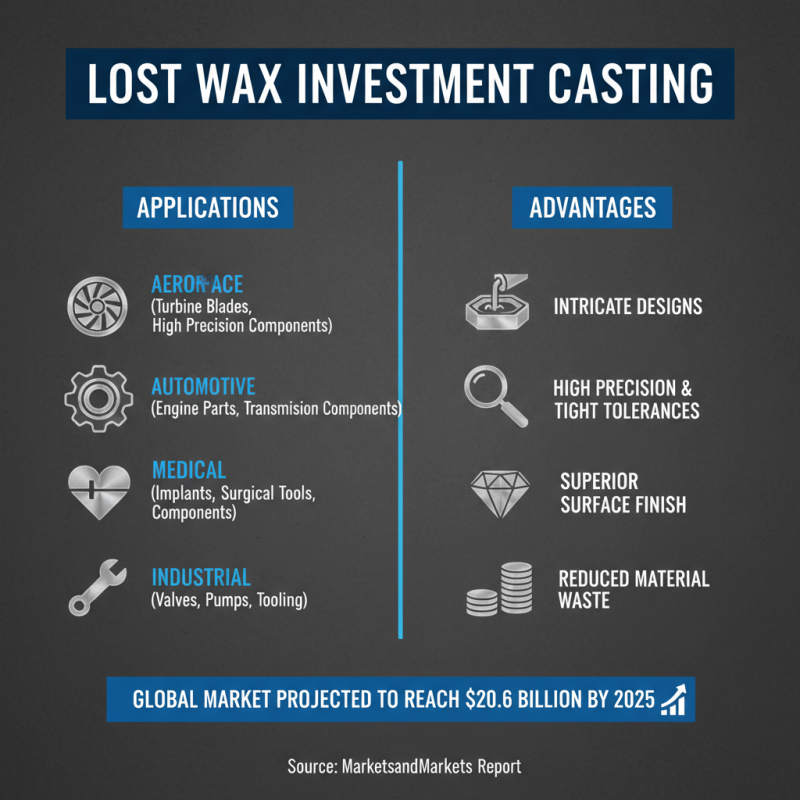
Lost Wax Investment Casting (LWIC) has gained popularity across various industries due to its unique benefits. This technique allows for intricate designs that are difficult to achieve with traditional methods. For example, the aerospace industry relies on LWIC for turbine blades, which require high precision and intricate cooling features. According to a report by MarketsandMarkets, the global investment casting market is projected to reach $20.6 billion by 2025. This is largely driven by industries demanding quality over quantity.
Another notable application is in the medical field. LWIC plays a critical role in producing complex surgical instruments. The accuracy of this method improves functionality and safety in surgeries. A study from the American Society of Mechanical Engineers highlighted that LWIC parts can maintain tolerances of ±0.1 mm, enhancing reliability. The automotive sector also benefits, as parts like engine blocks and housing components are produced with reduced material waste.
Despite its advantages, LWIC is not without challenges. The process can be time-consuming and requires skilled craftsmanship. Additionally, there are variations in quality if proper standards are not maintained. This inconsistency can lead to costly reworks or failures. Therefore, while LWIC offers remarkable solutions, it is essential to evaluate its efficiency against production demand and quality control measures.