2026 Top Pump Ss Precision Casting for Global Buyers
In the competitive landscape of manufacturing, the significance of "Pump Ss Precision Casting" shines through. This process, vital for producing high-quality components, is essential across various industries. Industry expert Dr. John Davis, a renowned authority in casting technologies, asserts, "Quality precision casting defines the reliability of pumping systems." His insights underline the importance of precision in creating durable and efficient components.
Precision casting ensures that pumps are not only functional but also resilient. The intricate details involved in the casting process determine the performance of pumping systems. Innovators in the field strive for perfection, yet challenges remain. For instance, variations in temperature can affect the quality of castings.
As the demand for Pump Ss Precision Casting grows, the industry must adapt. Companies face the task of balancing quality and cost-effectiveness. Reflecting on this dynamic, it’s clear there are areas for improvement. As we look to 2026 and beyond, the journey toward excellence in Pump Ss Precision Casting continues.
Top Pump SS Precision Casting: Overview of Key Features
Top Pump SS Precision Casting offers remarkable features that cater to various industries. This type of casting is known for its durability and strength. It withstands harsh environments, making it ideal for heavy-duty applications. The precision in manufacturing ensures tight tolerances, leading to efficient performance. Every detail matters when it comes to choosing precision casting.
Tips: Always assess the specific requirements of your project. Understand the operational environment. This will guide you in selecting the right material and design. Pay attention to surface finish as it affects performance and longevity.
Another key feature of Top Pump SS Precision Casting is its corrosion resistance. This adds to the reliability of the components. However, not all stainless steel is created equal. Factors like alloy composition play a crucial role in performance. It’s essential to verify the suitability of the material for your application.
Tips: Consider seeking expert advice when selecting materials. Research various stainless steel grades for optimal performance. Proper testing is also vital to ensure compatibility with intended uses.
2026 Top Pump SS Precision Casting for Global Buyers - Overview of Key Features
| Feature |
Description |
Benefits |
Applications |
| Durability |
High-quality stainless steel ensures long-lasting performance. |
Reduces maintenance costs and downtime. |
Industrial pumps, oil and gas, water treatment. |
| Corrosion Resistance |
Stainless steel provides resistance to corrosion in harsh environments. |
Enhanced longevity in corrosive applications. |
Chemical processing, marine applications. |
| Precision Casting |
Advanced casting techniques for optimal dimensional accuracy. |
Improved fit and performance of components. |
Pump manufacturing, automotive parts. |
| Custom Design |
Ability to produce customized castings based on client specifications. |
Tailored solutions for specific engineering challenges. |
Specialized equipment, unique machinery. |
| Cost-Effectiveness |
Economical manufacturing processes reduce costs. |
Lower total cost of ownership for users. |
Various industrial sectors. |
Materials Used in Precision Casting for Top Pumps
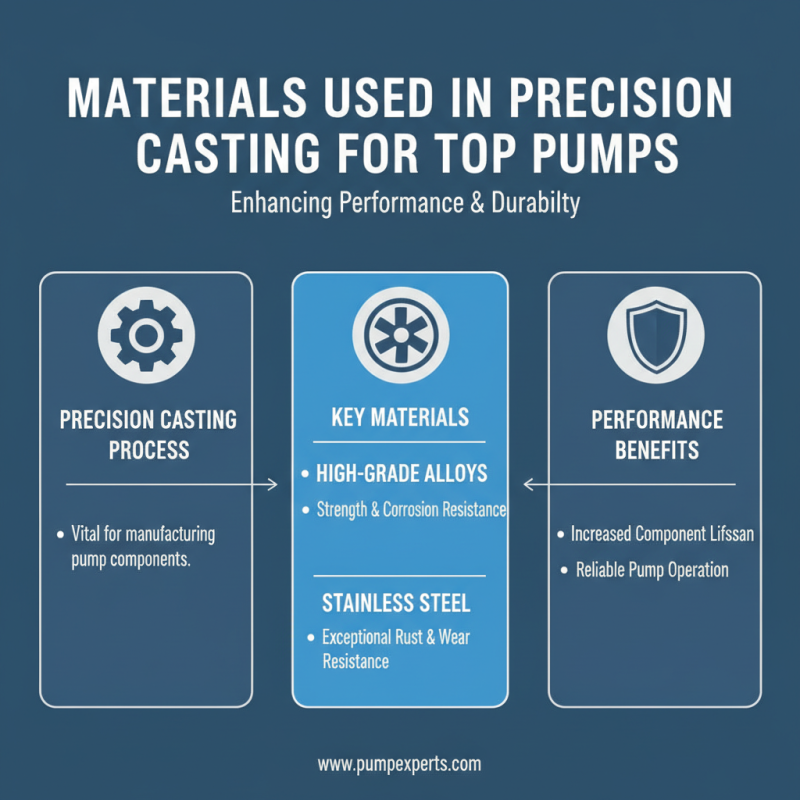
Precision casting has become a vital process in manufacturing top pumps. The materials used in this process significantly influence the performance and durability of these components. Commonly, high-grade alloys are preferred for their strength and corrosion resistance. For example, stainless steel is often utilized, offering exceptional resistance to rust and wear.
However, not all materials guarantee success. Some lower-grade alloys might seem cost-effective initially, but they often lead to failures. These failures can result in significant operational downtime. It is essential to strike a balance between cost and quality when selecting materials. Using advanced materials, like titanium or nickel-based alloys, may provide long-term benefits despite their higher upfront cost.
In addition, the casting method itself impacts the final product. Therefore, manufacturers should carefully evaluate both material selection and casting techniques. Failures in these areas can cost time and resources. It’s not just about choosing the right materials; it’s about understanding their limitations. More research can enhance the reliability of precision casting for pumps, leading to more efficient designs and better overall performance.
Global Market Trends for Precision Cast Pumps in 2026
As we move toward 2026, the global market for precision cast pumps is expected to experience significant growth. Reports indicate a projected annual growth rate of 4.2%. This increase is driven by advancements in technology and a surging demand across various industries. Manufacturing and water treatment sectors will significantly rely on precision casting techniques for their pump systems.
Several factors impact market trends. Environmental regulations push industries to adopt sustainable practices. Consequently, precision cast pumps are favorable due to their efficiency and durability. However, the market faces challenges such as high initial costs and the need for skilled labor. According to market analysts, companies need to focus on continuous improvement and innovation to stay competitive.
Moreover, regional variations in demand highlight the need for localized strategies. While North America exhibits steady growth, Asia-Pacific is anticipated to dominate due to rapid industrialization. Companies must be aware of these trends and adjust their production processes. Balancing cost-effectiveness and reliability will be crucial in meeting the evolving market needs.
Major Manufacturers and Suppliers of Top Pump SS Precision Castings
The global market for precision castings in the pump industry continues to expand. According to a recent market analysis report by Global Industry Analysts, the demand for stainless steel precision castings is projected to reach USD 3.4 billion by 2026. This growth is driven by the increasing adoption of precision castings in diverse applications, including industrial, automotive, and aerospace sectors.
Major manufacturers and suppliers play a critical role in this landscape. They leverage advanced manufacturing techniques to improve casting quality and reduce production costs. For instance, a significant number of suppliers are now utilizing 3D printing technology for creating molds, which can cut lead times by over 30%. However, some companies face challenges regarding material quality and consistency. The precision casting process must adhere to strict international standards, and any deviation can result in costly reworks.
Sustainability is another focus for these manufacturers. Reports indicate that nearly 60% of companies are investing in eco-friendly practices. This includes the use of recycled materials and reducing waste during production. Nonetheless, there is still a long way to go. Industry-wide initiatives need to grow stronger to ensure that all players comply with the latest environmental regulations. Balancing quality, cost, and sustainability remains an ongoing challenge.
Applications and Industries Utilizing Precision Casting Technology
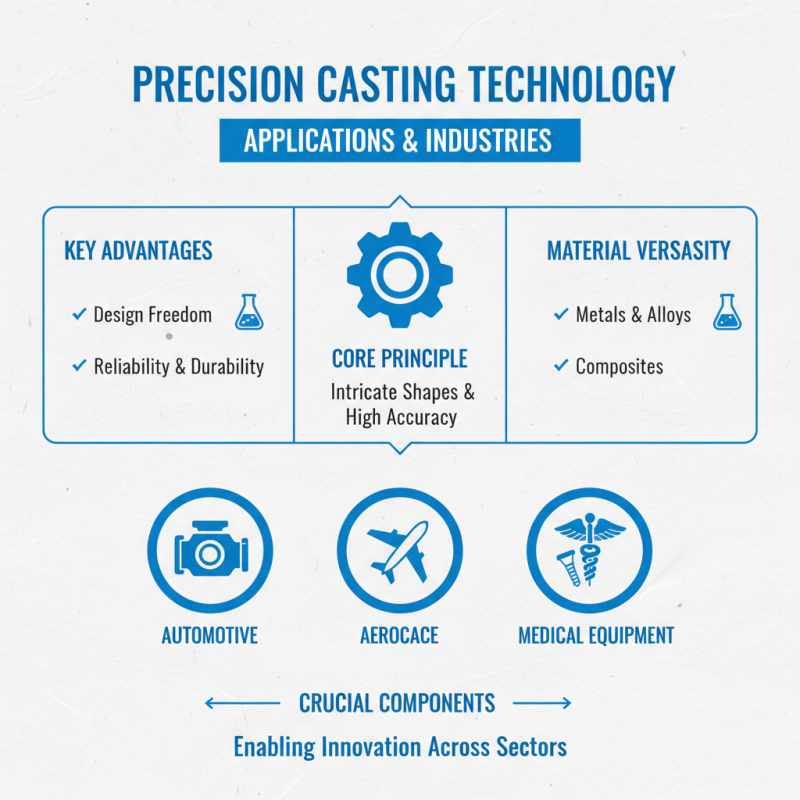
Precision casting technology plays a crucial role in various industries today. It allows manufacturers to create intricate shapes and designs with high accuracy. This has led to significant advancements in sectors such as automotive, aerospace, and medical equipment. Each of these sectors relies on the precision and reliability that casting provides.
In the automotive industry, precision casting is vital for producing engine components. These parts must withstand high temperatures and pressures. In aerospace, lightweight components are needed to improve fuel efficiency. Complex geometries in jet engines and landing gear are often achieved through precision casting. Additionally, the medical field benefits from custom implants made with this technology. These implants can be tailored to fit individual patient needs.
Despite its advantages, challenges persist. Material selection and quality control are crucial areas that require ongoing attention. Manufacturers must constantly innovate to address these issues. The demand for precision and efficiency keeps rising. Companies need to stay ahead of the curve by investing in research and development.