Top 10 Investment Casting Supplies for Global Sourcing
Global sourcing for Investment Casting Supplies is becoming more technical, traceable, and difficult to judge from price alone. Market estimates show this pressure clearly. Grand View Research valued the global investment casting market at approximately USD 14.1 billion in 2022, with projected growth through 2030. Fortune Business Insights reported different figures, estimating the market at USD 16.9 billion in 2024. These differences deserve attention. They reflect different definitions, regions, and research methods.
This guide, “Top 10 Investment Casting Supplies for Global Sourcing,” examines the practical items behind reliable production. These include ceramic shell materials, waxes, binders, refractories, filters, risers, and inspection tools. A supplier may promise tight tolerances. Yet the real evidence appears in batch records, dimensional reports, material certificates, and delivery performance. Small details matter. A cracked shell can ruin an entire turbine component.
John Campbell, a leading casting researcher and author of Complete Casting Handbook, stated, “The quality of a casting is determined by the quality of the liquid metal.” His principle remains highly relevant for procurement teams. Poor melt cleanliness can make premium tooling almost useless. Buyers should also review ISO 9001 systems, ASTM specifications, traceability practices, and nondestructive testing capabilities.
Not every low-cost source is unreliable. Not every premium supplier is consistent. That is the uncomfortable part. This overview compares quality, compatibility, documentation, lead times, and total sourcing risk. It is designed for engineers, purchasing managers, and manufacturers building a more dependable global supply chain. Mistakes still happen. Better questions reduce them.
Defining Investment Casting Supplies and Their Role in Global Sourcing
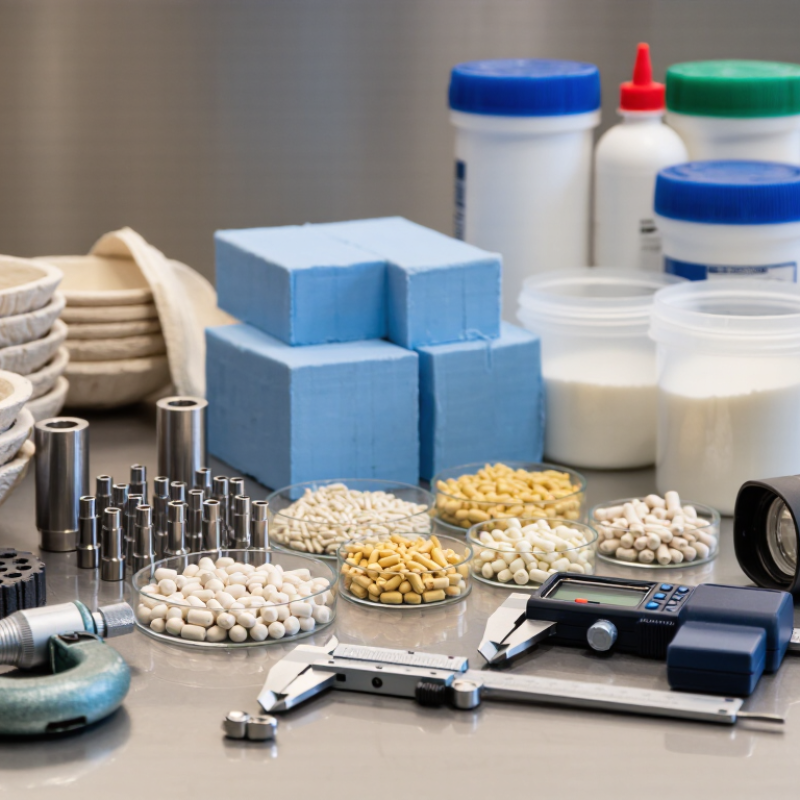
Investment casting supplies are the materials, equipment, and controls that turn a wax pattern into a precise metal component. The ten main groups include pattern wax, tooling, release agents, ceramic slurry, stucco sand, binders, dewaxing systems, melting furnaces, filtration materials, and inspection equipment. The definition is not perfectly fixed. Some buyers include packaging and export documentation, while others do not. In practice, both can affect sourcing results.
The World Foundry Organization’s 2023 Census reported more than 109 million tonnes of global casting production in 2022. Investment casting represents a smaller segment, but it supports demanding aerospace, medical, energy, and industrial applications. Supplies therefore influence more than factory cost. Wax stability affects dimensional accuracy. Ceramic shell quality affects surface defects. Furnace calibration affects alloy chemistry. Inspection tools confirm whether the promised tolerance is real.
I have seen sourcing teams compare prices while overlooking slurry shelf life and local technical support. That is a costly gap. A supplier scorecard should record material certificates, batch traceability, process capability, lead time, packaging strength, and corrective-action history. ISO 9001:2015 provides a useful quality-management framework, but certification alone proves little about casting performance. The 2024 Global Investment Casting Market report by Fortune Business Insights estimates continued market growth through the decade. Forecasts remain uncertain. Demand, energy prices, and regional logistics can change quickly. A stronger decision combines report data with trial castings, measured results, and honest supplier communication.
Classifying the Top Ten Investment Casting Supply Categories
Top 10 Investment Casting Supplies for Global Sourcing
Classifying the Top Ten Investment Casting Supply Categories
Investment casting sourcing starts with ten practical categories: wax patterns, dies, ceramic shells, refractory materials, binders, alloys, melting equipment, process-control tools, inspection systems, and finishing services. These categories cover the complete route from pattern replication to shipment-ready components. MarketsandMarkets’ Investment Casting Market report projects steady growth through 2028, supported by aerospace, medical, and industrial demand. That growth increases pressure on supply consistency, not merely price.
Wax and tooling suppliers control dimensional repeatability. Ceramic shells require stable slurry viscosity, grain size, and drying conditions. Alloy suppliers must provide heat numbers, chemical certificates, and traceable melt records. Furnaces need temperature uniformity data, while inspection suppliers should support CMM, radiographic, or dimensional verification. The 2024 ASTM aerospace manufacturing outlook emphasizes process qualification and material traceability as key risk controls. Small records matter.
Finishing and logistics deserve equal attention. Cutting, blasting, heat treatment, and surface correction can change final tolerances. Packaging must prevent edge damage, moisture exposure, and mixed-lot errors. In supplier audits, I would compare first-article results with serial-production data, then review corrective-action speed. A low quotation can hide expensive rework. My ranking is not absolute; regional energy costs, import rules, and alloy availability can change category priorities. The Global Foundry Market report by Research and Markets also links automation investment with stronger quality monitoring, although smaller suppliers may struggle to fund it. That weakness deserves honest review.
Comparing Global Sourcing Costs, Standards, and Delivery Conditions
Top 10 Investment Casting Supplies for Global Sourcing
Comparing Global Sourcing Costs, Standards, and Delivery Conditions
Investment casting buyers usually source wax patterns, ceramic slurry, stucco, binders, alloys, filters, crucibles, gating materials, cutoff wheels, and inspection gauges. The lowest quote rarely gives the lowest total cost. Freight, import duties, packaging, testing, and rejected batches can change the result quickly. A small price difference may disappear after one delayed shipment.
During supplier reviews, I compare material certificates, batch traceability, dimensional reports, and documented process controls. Suppliers should explain alloy chemistry, ceramic shell strength, storage limits, and shelf life clearly. Standards vary between regions, so purchasing teams must align specifications before requesting quotations. Clear drawings help, but sample approval remains essential. It catches practical problems that paperwork misses.
Delivery conditions deserve equal attention. I check production lead time, export packing, minimum order quantity, port options, and replacement procedures. Temperature-sensitive binders may need controlled storage during transit. Some suppliers promise fast delivery, yet their raw materials come from another country. That hidden dependency matters. My own sourcing reviews have not always been tidy. I once focused too heavily on unit cost and underestimated inspection delays. That mistake changed our quotation checklist. Reliable sourcing still needs judgment, not just spreadsheets. A cheaper source can be useful, but only when quality evidence and delivery performance remain visible.
Building a Step-by-Step Purchasing Strategy for Investment Casting Supplies
Top 10 Investment Casting Supplies for Global Sourcing
Building a Step-by-Step Purchasing Strategy for Investment Casting Supplies
A reliable purchasing plan starts with the casting, not the catalogue. Define the alloy, wall thickness, surface finish, annual volume, and allowable defects. Then map ten supply groups: pattern wax, dies, ceramic slurry, stucco, binders, refractory flour, filters, crucibles, cutoff wheels, and inspection gauges. Keep the list practical.
Grand View Research estimates the global investment casting market reached approximately USD 17 billion in 2023, with continued growth expected through 2030. That expansion increases pressure on supply consistency. Request technical data sheets, batch certificates, shelf-life details, and storage instructions. For ceramic materials, compare viscosity, particle size, drying time, and shell strength. Small differences can affect cracking.
Build a two-stage approval process. First, test samples using your actual alloy and shell cycle. Next, review dimensional results, inclusions, tensile performance, and delivery records. ISO 8062 supports casting tolerance discussions, while ASTM E8/E8M guides tensile testing. Ask suppliers to provide traceability from raw material to shipment. It sounds basic.
Calculate landed cost, not only unit price. Include freight, duties, packaging, inspection, rejected parts, and emergency inventory. The World Bank’s 2023 Logistics Performance Index shows uneven logistics performance across economies, so lead-time claims need evidence. A port delay can cancel a cheap purchase. Our first checklist missed packaging humidity; that mistake taught us to inspect sealed containers before approval.