China Top 10 Marine Copper Casting Techniques You Should Know?
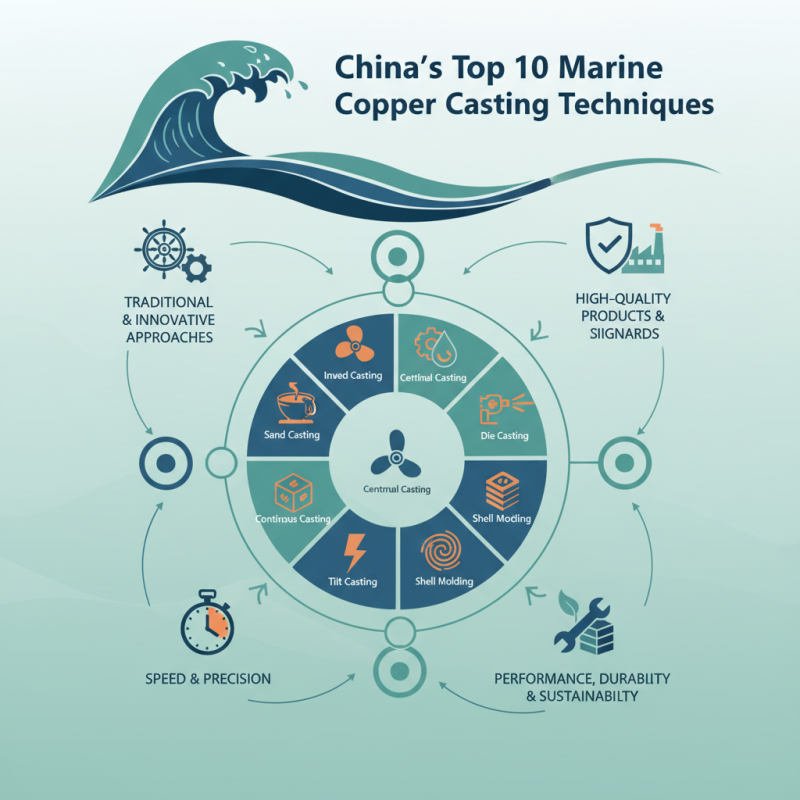
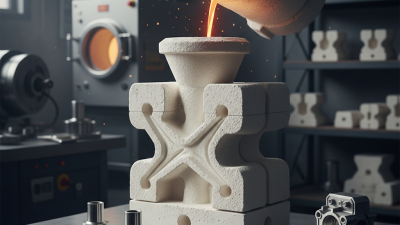
Marine Copper Casting techniques play a crucial role in various industries. In China, these methods have evolved significantly, showcasing both traditional and innovative approaches. Many companies specialize in Marine Copper Casting, ensuring high-quality products that meet rigorous standards.
Understanding the top techniques is essential for anyone involved in manufacturing or marine engineering. Each method has unique benefits and challenges. Some techniques emphasize speed, while others focus on precision. This landscape requires continuous learning and adaptation. The field is not without obstacles, and professionals often face unexpected issues.
Reflecting on the evolution of Marine Copper Casting reveals how critical these methods are. They influence performance, durability, and sustainability. As industries grow, so must our knowledge and practices in Marine Copper Casting.
Overview of Marine Copper Casting Techniques in China
Marine copper casting techniques in China are significant in various industries. These methods
play a crucial role in creating durable and corrosion-resistant marine components. Techniques range from sand casting to die casting, each with distinct advantages.
For instance, sand casting allows for greater flexibility in design and the production of large parts.
When considering these techniques, it is essential to understand their applications. Often, the choice depends on the specific requirements of the project.
Some techniques may not be suitable for all marine environments. Reflecting on the limitations can help manufacturers choose wisely.
Tips for successful casting include regular maintenance of molds and machinery. Consistent quality checks are vital for ensuring
dimensional accuracy. Incorporating advanced technology, such as computer-aided design, can enhance precision. However, relying solely on technology may overlook human insight,
which is invaluable. Balancing both can yield better outcomes in marine copper casting.
Historical Development of Copper Casting in Marine Applications
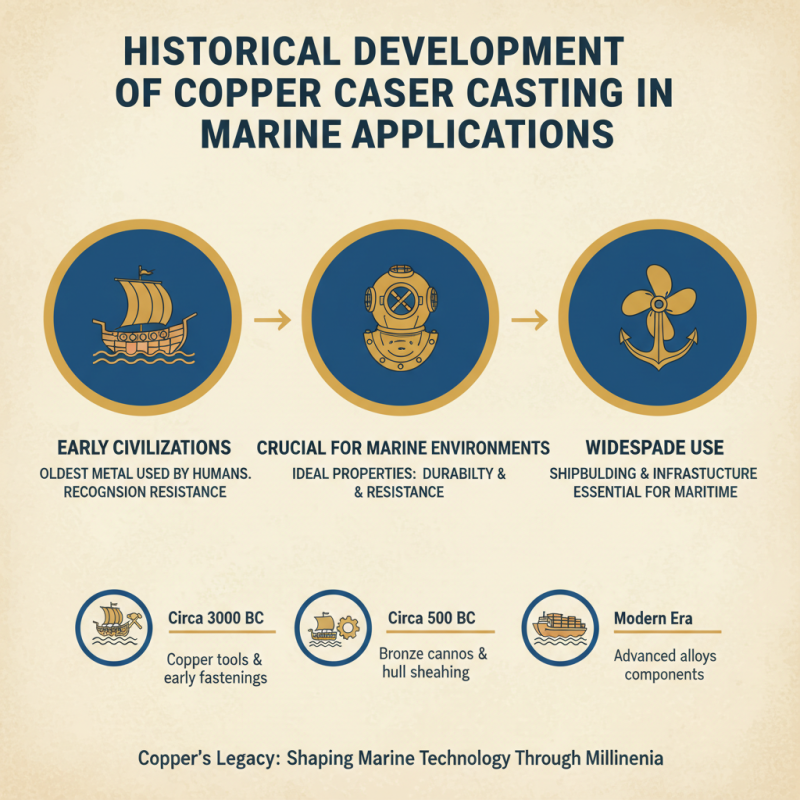
Copper casting has played a crucial role in marine applications over the years. As one of the oldest metals used by humans, copper's properties made it ideal for marine environments. Early civilizations recognized that copper offered good corrosion resistance. This insight led to its widespread use in shipbuilding and marine infrastructure.
Technological advancements have shaped the copper casting process. With the rise of industrialization, methods improved significantly. Techniques such as sand casting and investment casting became common. However, these methods weren't always foolproof. Issues like porosity and defects often arose, requiring further refinement. Today, controlled environments and precise methodologies enhance the quality of marine copper castings.
Despite progress, challenges remain. The quest for stronger and more durable alloys continues to evolve. Marine engineers often revisit historical techniques to find solutions. Some methods, though outdated, still offer valuable insights. Experimentation is vital for developing innovative solutions. The rich history of copper casting in marine applications highlights a blend of tradition and modern ingenuity.
Key Properties of Copper Alloys Used in Marine Environments
Copper alloys are essential in marine environments due to their excellent resistance to corrosion. This property is crucial where saltwater exposure is constant. These alloys perform well under harsh conditions, maintaining structural integrity over time.
Brass and bronze are popular choices for marine applications. They exhibit strength while resisting biofouling. For instance, bronze's ability to withstand cavitation makes it ideal for propellers and shafts. Some alloys are more effective than others. There is a need for careful selection based on specific use cases.
In practice, not all copper alloys are equal. Variations exist in their resistance to corrosion and wear. Some might perform well today but falter in the future. A thorough understanding of each alloy type is necessary. Engineers may need to refine their choices and test them regularly to ensure optimal performance.
Popular Copper Casting Techniques: Sand, Investment, and Die Casting
Copper casting is essential in marine applications. Among the most popular techniques are sand casting, investment casting, and die casting. Each method offers unique advantages and challenges.
Sand casting is widely used. It involves creating a mold from sand. This technique is cost-effective but can result in rough finishes. The quality may vary. Proper sand selection is crucial for success. Many inexperienced foundries overlook this detail.
Investment casting provides higher precision. It uses wax patterns coated in ceramic. This technique produces intricate designs and smooth surfaces. However, it can be more expensive. Not every project justifies this cost. Die casting, on the other hand, offers high-volume production. It delivers consistent quality but requires a higher initial investment.
All techniques have their pros and cons. Understanding these will guide better decisions in marine applications. Experience in the field is key. Finding the right balance between cost and quality can be challenging. Few experts have mastered all techniques. Continuous learning and adaptation are necessary.
Industry Standards and Regulations for Marine Copper Castings in China
In the marine industry, the standards for copper castings are crucial. China follows strict regulations to ensure quality and safety in marine applications. The GB/T 5230-2009 is one prominent standard, outlining the requirements for marine copper alloys. Compliance with this standard is essential for manufacturers aiming for market credibility.
Testing for mechanical properties is a vital part of the certification process. A recent report from the China Marine Equipment Industry Association shows that approximately 70% of defects can be traced back to inadequate testing. This highlights the need for rigorous quality control measures. Manufacturers must ensure that their products meet or exceed the tensile strength and corrosion resistance specified in industry norms.
Sustainability is becoming increasingly significant in casting processes. As regulations tighten, manufacturers must innovate towards greener practices. For example, recycling copper can significantly reduce environmental impact. However, many factories still face challenges in implementing these sustainable methods. The shift towards eco-friendly practices requires time, investment, and a commitment to change.