2025 Top 10 Innovations in Soluble Wax Investment Casting Technology
The realm of manufacturing has witnessed remarkable advancements over the past few decades, with
Soluble Wax Investment Casting carving out a significant niche due to its efficiency and precision. This innovative technology has proven invaluable, especially in industries such as aerospace and automotive, where the demand for complex geometries and lightweight components is ever-increasing.
According to a recent report by MarketsandMarkets, the investment casting market is projected to grow from $15.21 billion in 2020 to $20.70 billion by 2025, highlighting the increasing interest and reliance on sophisticated casting techniques like Soluble Wax Investment Casting.
Renowned expert in the field, Dr. Thomas Eckhardt, emphasizes the transformative impact of this technology, stating,
“Soluble Wax Investment Casting not only enhances the accuracy of the final products but also significantly reduces material waste, making it a critical component in sustainable manufacturing.”
This dual advantage of precision and sustainability positions
Soluble Wax Investment Casting at the forefront of industry innovations, prompting a broader adoption of this method.
As we look ahead, the next decade holds promising potential for further enhancements that could redefine manufacturing processes across various sectors.
The upcoming year marks a pivotal moment for this technique, with the anticipated release of the
"2025 Top 10 Innovations in Soluble Wax Investment Casting Technology," which aims to showcase the groundbreaking developments set to transform the industry landscape.
Emerging Trends in Soluble Wax Investment Casting for 2025
As we approach 2025, the field of soluble wax investment casting technology is witnessing significant innovations that are reshaping the industry. One of the key trends is the development of advanced wax formulations that enhance the casting process's efficiency and precision. These new materials not only improve the flow characteristics during pouring but also enable more intricate designs to be realized without compromising the final product's integrity. Additionally, the integration of digital technologies and automation in the mold-making process is streamlining operations, ultimately reducing production time and costs.
**Tips:** When exploring these advancements, consider investing in training for your team. Familiarizing staff with the latest techniques and technologies will ensure a smooth transition and optimal use of new materials. Collaborating with research institutions can also provide insights into emerging methods and materials, keeping your operations ahead of the curve.
Another emerging trend is the focus on sustainability within the soluble wax investment casting sector. Manufacturers are increasingly seeking eco-friendly wax alternatives and recycling methods, reducing waste and environmental impact. This shift not only appeals to environmentally conscious consumers but also aligns with global trends towards sustainability in manufacturing.
**Tips:** To stay competitive, companies should evaluate their supply chains to identify opportunities for integrating sustainable practices. Regularly reviewing and researching eco-friendly innovations will provide a sustainable edge while fulfilling corporate responsibility goals.
2025 Top 10 Innovations in Soluble Wax Investment Casting Technology
This chart illustrates the anticipated advancements in soluble wax investment casting technology for 2025. Each bar represents a key innovation expected to impact the industry significantly.
Advancements in Material Science for Enhanced Wax Performance
The advancements in material science have profoundly influenced the performance of soluble wax in investment casting technology. Recent studies show that utilizing specialized polymer blends can enhance the thermal stability of wax patterns, resulting in less deformation during the casting process. According to a report by MarketWatch in 2022, the investment casting market is expected to reach $24 billion by 2025, highlighting the growing demand for innovations in materials such as wax.
Moreover, the introduction of bio-based wax materials is offering significant environmental benefits, as they contribute to sustainability within the industry. Research indicates that these renewable resources can reduce the carbon footprint of casting operations by up to 30%. In addition, the consistency and reliability of wax produced from these materials have improved, leading to enhanced mold quality and surface finish. A study from the Journal of Materials Science in 2023 confirmed that advancements in wax formulations could lead to a reduction in post-processing requirements by approximately 15%, further streamlining production and reducing costs.
Integration of 3D Printing in Soluble Wax Patterns
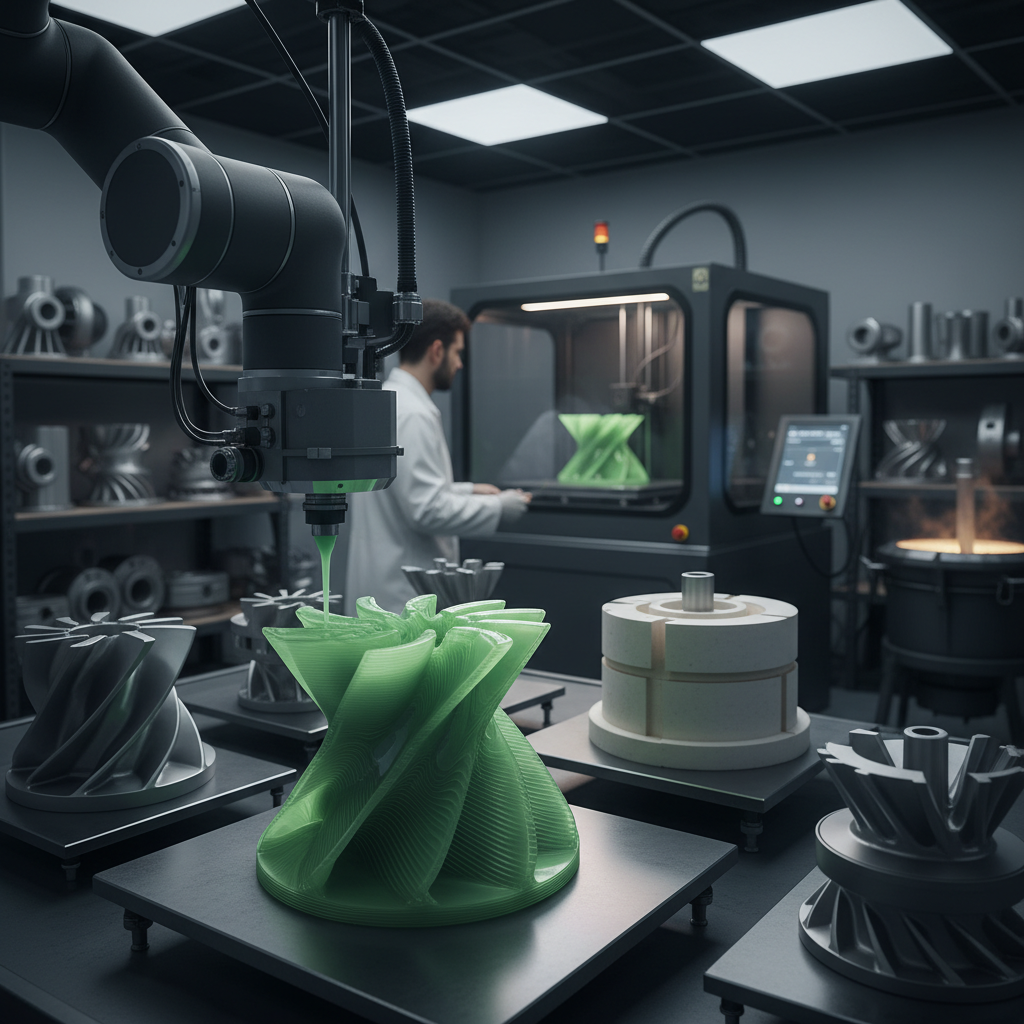
The integration of 3D printing in soluble wax patterns marks a significant advancement in investment casting technology. Traditionally, the process involved labor-intensive methods to create intricate components such as pumps and impellers. However, with the advent of 3D printing, manufacturers can now produce complex geometries more efficiently, reducing lead times and minimizing material waste. The ability to swiftly iterate design changes allows for innovative solutions to emerge, particularly in industries demanding high precision and adaptability.
Moreover, advancements in 3D printing have broadened the scope of applications within the casting process. For example, bio-inspired soft robots are being developed with pneumatic actuators that can be fabricated in a single casting step. This approach not only simplifies production but also enhances the functionality of the components by enabling designs that effectively respond to environmental uncertainties. As the synergy between 3D printing and soluble wax patterns continues to evolve, we can expect even more sophisticated designs and enhanced performance in various engineering applications.
Sustainability Practices in Soluble Wax Investment Casting
The investment casting industry is undergoing a transformative shift towards sustainability, particularly in the use of soluble wax technology. Reports indicate that with the adoption of soluble wax patterns, companies have significantly reduced waste by up to
30%, as these materials dissolve in hot water and leave no residue. This shift not only minimizes the environmental footprint but also enhances production efficiency. In fact, the global investment casting market is projected to reach
USD 20 billion by 2025, driven in part by advancements in eco-friendly materials.
Moreover, sustainable practices in soluble wax investment casting extend into energy consumption. According to the International Energy Agency (IEA), the manufacturing sector could cut down its energy use by nearly
25% by implementing state-of-the-art techniques and materials. These innovations not only focus on reducing emissions but also streamline processes to conserve energy. Companies embracing these sustainable practices are not only meeting regulatory standards but also responding to growing consumer demand for
environmentally responsible manufacturing, positioning themselves well for future growth in a competitive market.
Impact of Automation on Production Efficiency in Casting Processes
The advancement of automation in the investment casting process has significantly transformed production efficiency, particularly in the soluble wax investment casting technology segment. According to a recent industry report by Grand View Research, the global investment casting market is expected to reach $25.5 billion by 2027, growing at a CAGR of 5.6%. Automation plays a crucial role in achieving this growth, allowing manufacturers to streamline operations, reduce labor costs, and minimize human error.
Integrating automated systems into casting processes has been shown to enhance production efficiency by up to 30%, as reported by the Casting Industry Association. By utilizing robotic arms for tasks such as wax pattern handling and mold assembly, companies can decrease cycle times and increase output without sacrificing quality. Furthermore, the adoption of advanced technologies like machine learning and IoT has enabled real-time monitoring and predictive maintenance, ensuring that machinery operates at peak performance. As the manufacturing landscape continues to evolve, the impact of automation in soluble wax investment casting will likely pave the way for innovative solutions that meet rising industry demands while enhancing operational efficiency.