Why Choose Investment Casting Products for Your Next Project?
Investment casting products have become a preferred choice in various industries, known for their reliability and precision. According to a recent report by Grand View Research, the global investment casting market is projected to reach USD 36.15 billion by 2025. This significant growth emphasizes the demand for investment casting techniques, especially in sectors like aerospace, automotive, and medical devices.
Expert James Sullivan, a renowned industry consultant, states, “The precision of investment casting products is unmatched in enabling complex designs.” This efficacy allows manufacturers to create intricate parts efficiently, often leading to reduced lead times. Nonetheless, there are challenges, such as the high initial costs and the need for advanced technology.
These factors may lead some companies to reconsider their choices. Yet, the advantages of investment casting products often outweigh these concerns. The durability and customization options available make it a compelling option for high-stakes projects, challenging organizations to reflect on their production strategies.
The Advantages of Investment Casting in Precision Manufacturing
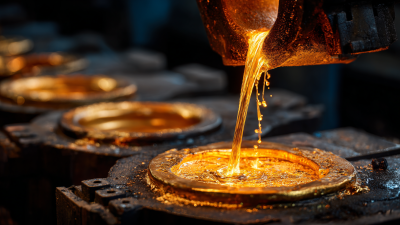
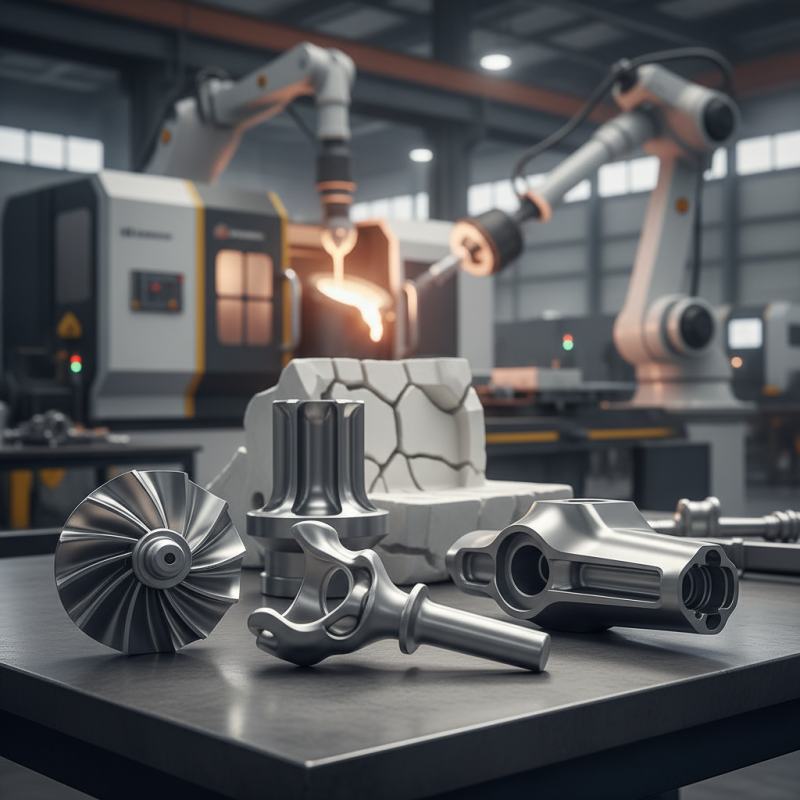
Investment casting offers distinct advantages in precision manufacturing. It allows for the creation of complex shapes that other methods might struggle to achieve. This technique involves pouring molten metal into a precise mold, resulting in parts with tight tolerances. These features enhance functionality in various applications, from aerospace to medical devices.
One might question the initial costs involved in investment casting. While the tooling can be expensive, the long-term benefits often outweigh these costs. Production efficiency is notably improved, as investment casting reduces material waste. Additionally, the finish quality of components can limit the need for further machining.
However, it is essential to acknowledge certain challenges. The intricacy of designs can lead to longer lead times for development. Furthermore, not all metals are suitable for this process. A careful selection of materials is crucial. Despite these hurdles, investment casting remains a compelling choice for projects demanding precision and detail.
Advantages of Investment Casting in Precision Manufacturing
Comparative Cost Analysis: Investment Casting vs. Other Methods
When choosing manufacturing methods, cost is a significant factor.
Investment casting offers unique advantages. However, it's worth comparing it to other methods like
sand casting or CNC machining. Investment casting can produce complex shapes with a smooth finish,
potentially reducing secondary processing costs.
In terms of cost, investment casting has higher upfront tooling expenses. Yet, it can lower
labor costs due to automation. When producing large volumes, this type of casting often becomes
more economical. Additionally, it allows for thinner walls and lighter parts, which can reduce
material costs.
Tip: Always consider the total cost of production. This
includes the design, material, and labor. Don’t just focus on initial costs.
Another factor is time. While molds take time to create, the actual casting process can be quicker than
other methods. This speed can be beneficial for tight timelines.
Tip: Evaluate your project's urgency when selecting a method.
Is speed essential, or do you have time for longer processes? Always weigh your project’s specific needs.
Material Versatility: Metals Commonly Used in Investment Casting
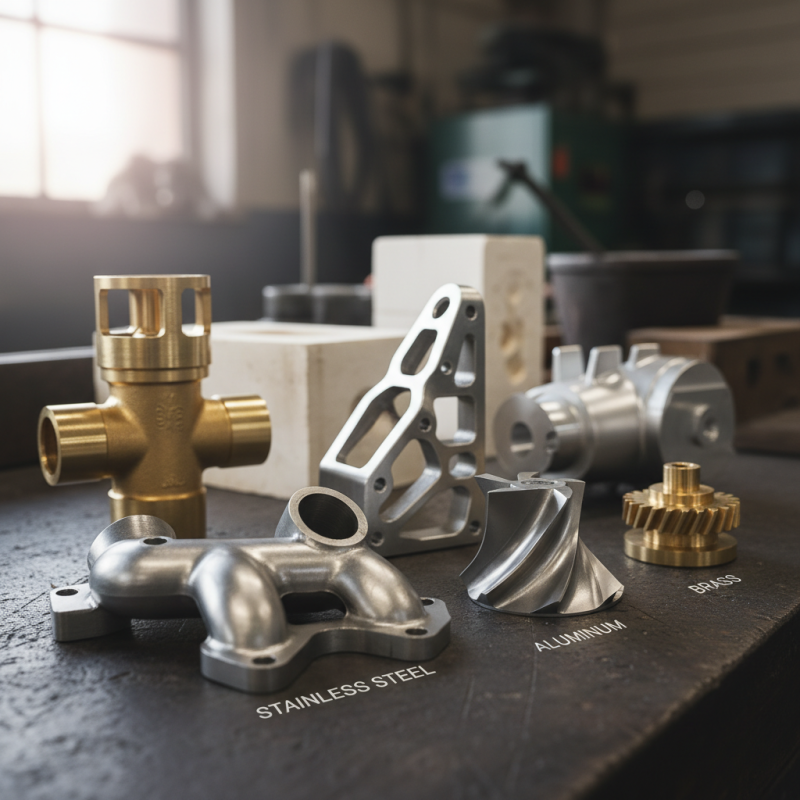
Investment casting offers a unique choice for various projects due to its remarkable material versatility. Several metals are commonly used in this process, including stainless steel, aluminum, and brass. Stainless steel is often favored for its strength and corrosion resistance. It is useful in industries like automotive and aerospace. Aluminum casting is lightweight yet strong, making it ideal for applications requiring reduced weight.
Brass is known for its excellent machinability and attractive finish. It is often used in plumbing fixtures and decorative items. However, the selection of a metal should align with specific project requirements. It is essential to consider not just the metal's properties but also the intended use. Each metal has unique challenges, whether it's workability or cost.
Finding the right balance can be tricky. For example, stainless steel may be durable but can be difficult to process. Aluminum offers ease of work but might not stand up in extreme conditions. Each metal serves a purpose, but the choice should reflect the demands of the project. Careful thought is necessary to avoid potential pitfalls in your selection process.
The Eco-Friendly Aspects of Investment Casting Techniques
Investment casting stands out for its eco-friendly attributes. This technique significantly reduces waste compared to traditional casting methods. Typically, investment casting utilizes a wax or polymer pattern, which can be recycled after use. This minimizes material loss during production.
Moreover, investment casting allows for the creation of complex shapes. It reduces the need for extensive machining, which often consumes energy and resources. The precision of the cast items means that fewer materials are wasted during production. Additionally, using sustainable materials can further enhance the environmental benefits of the process.
While investment casting offers many advantages, challenges exist. Not every design is suitable for this technique. Some intricate designs may require adjustments. The initial setup costs can be high, but the long-term savings in materials may offset this. Evaluating the trade-offs is crucial for successful implementation. Every project demands careful consideration of these factors.
Case Studies: Successful Projects Utilizing Investment Casting
Investment casting has proven itself in a variety of industries. One significant success story comes from the aerospace sector. A major manufacturer required a lightweight component that could withstand high stress. Through investment casting, they produced a titanium part that reduced weight by 30%. This improvement increased fuel efficiency, showcasing investment casting’s capability for complex geometries.
Another noteworthy case emerged in the medical device industry. A company sought precision in creating surgical instruments. By utilizing investment casting, they achieved the intricate designs needed for effective functionality. The resulting instruments not only met industry standards but also demonstrated enhanced durability. According to industry reports, investment casting can reduce production costs by up to 25% while maintaining quality.
Yet, challenges exist. Some companies faced issues with surface finish quality and dimensional accuracy. These setbacks prompted them to refine their processes, leading to better outcomes in subsequent projects. Continuous improvement is key in investment casting, as perfecting techniques often requires feedback and adaptation. Such reflections can drive innovation, reinforcing why investment casting remains a vital choice in various manufacturing processes.