Investment Casting Parts Tips for Global Suppliers to Succeed?
In the competitive world of manufacturing, global suppliers must adapt to succeed in providing high-quality Investment Casting Parts. Industry expert Dr. James Thompson, a leading authority in metal casting, emphasizes, "Innovation and precision are the cornerstones of effective investment casting." This highlights the need for suppliers to focus on quality and technological advancement.
Investment Casting Parts play a critical role in sectors like aerospace and automotive. Suppliers must understand market demands and trends. The pressure to reduce costs can lead to corners being cut in quality. Suppliers should not overlook the significance of intricate designs and material integrity.
Adapting to new technologies is essential for staying relevant. Many suppliers face challenges in workforce training and managing supply chains. Embracing collaboration and knowledge sharing can be beneficial. As the industry evolves, suppliers must reflect on their practices and strive for continuous improvement in their investment casting processes.
Understanding the Global Market for Investment Casting Parts
Understanding the global market for investment casting parts is crucial for suppliers aiming for success. Recent reports indicate that the global investment casting market is projected to reach approximately $20 billion by 2026. This growth reflects increased demand across various sectors, including aerospace and automotive.
Market trends show a rising focus on high precision and lower production costs. Suppliers must adapt to these requirements. Quality control is necessary; defects can lead to significant losses. Notably, the aerospace sector requires parts that meet stringent safety standards. Failing to meet these can result in penalties and loss of business.
Another aspect to consider is regional market dynamics. North America and Europe currently dominate the industry. However, Asia-Pacific is emerging rapidly, driven by manufacturing growth. Companies must understand local regulations and customer preferences. Addressing these factors can open new opportunities. Suppliers should also invest in technology. Advanced processes can enhance efficiency and quality. Staying updated is vital. Embracing change is necessary, as the market evolves quickly.
Key Quality Standards for Investment Casting in Global Supply Chains
Investment casting is integral to many industries, demanding high-quality standards for global suppliers. Key metrics in this realm focus on dimensional accuracy, surface finish, and mechanical properties. Industry reports indicate that compliance with ISO 9001 enhances quality assurance processes. Suppliers must systematically document their processes. A lack of proper documentation can lead to critical failures in quality.
Data also reveals that over 30% of casting defects arise from improper tooling. This underscores the importance of precision in tool design and maintenance. Suppliers often overlook tool wear and tear, resulting in costly reworks. Moreover, surface irregularities can significantly impact end-product performance. Adherence to stringent surface finish standards, such as ASTM A780, is critical for achieving product compliance.
Understanding global certifications can be daunting. Many suppliers struggle with the complexities of different regulatory standards. Regular audits and training can bridge this gap. Continuous improvement should be a goal, incorporating feedback loops from production teams. Addressing these areas can lead to better market positioning and improved customer satisfaction.
Strategic Approaches to Supplier Collaboration in Investment Casting
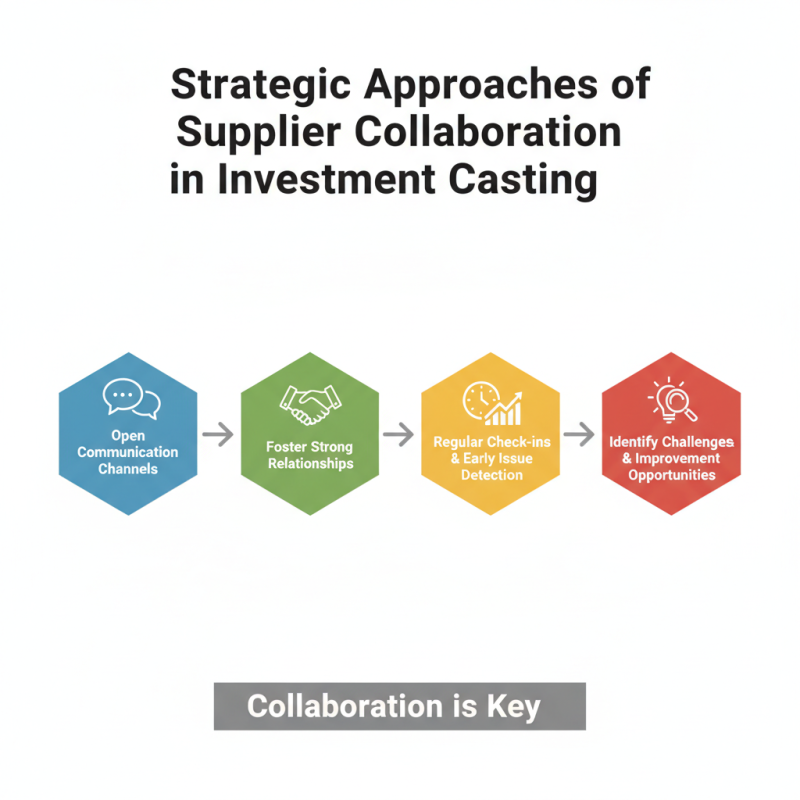
In the realm of investment casting, collaboration is key. Suppliers must engage proactively to foster strong relationships. Open communication channels can make or break a project. Regular check-ins help in identifying issues early. These discussions can reveal unforeseen challenges and opportunities for improvement.
Strategic partnerships can enhance production efficiency. Suppliers should focus on shared goals, ensuring alignment in quality and delivery expectations. Leveraging technology can streamline operations. Digital tools, like inventory management systems, promote transparency. However, there’s a risk of over-reliance on technology. Human oversight is vital.
Each supplier has unique strengths and weaknesses. Understanding these can lead to tailored strategies. Continuous feedback loops are crucial. Regular assessments of supplier performance can illuminate areas needing change. Embracing a mindset of adaptability can help navigate the complexities of global supply chains.
Technological Innovations Enhancing Investment Casting Efficiency
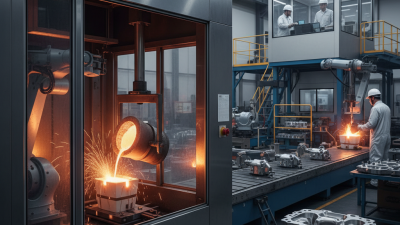
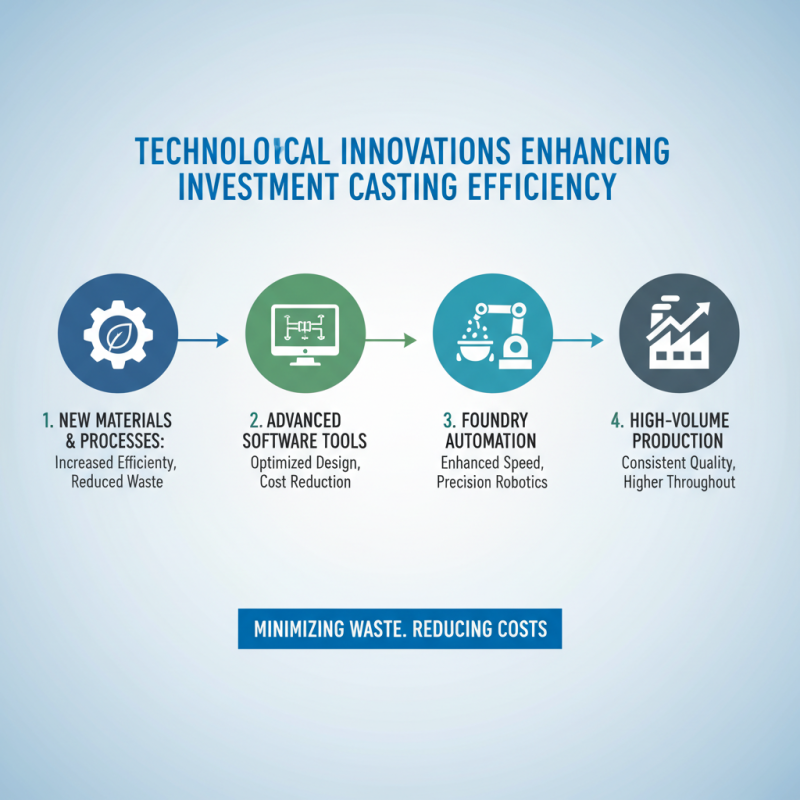
Technological innovations are reshaping the investment casting industry. New materials and processes are increasing efficiency. Advanced software tools now optimize design and production. This minimizes waste and reduces costs. Automation in the foundry enhances speed and accuracy. Robots handle intricate tasks that require precision. This is especially effective in high-volume production environments.
3D printing is making a significant impact, too. It allows rapid prototyping of complex shapes. This reduces the time from design to final part. However, not all suppliers embrace these changes. Some hesitate due to the learning curve involved. Transitioning to new technologies requires investment and training. It’s a challenge, but potential benefits are significant. Suppliers must address these gaps to remain competitive.
Furthermore, data analytics plays a crucial role. Real-time monitoring of production processes helps identify inefficiencies. Some companies struggle with implementation, as it requires a cultural shift. Relying on data can feel daunting. Yet, those who adapt will likely find new opportunities. Embracing innovation is not merely an option; it’s essential for survival in this evolving market.
Analyzing Cost Management Strategies in Investment Casting Production
Cost management is crucial in investment casting production. Creating a budget requires understanding material and labor costs. Efficient planning can help suppliers avoid pitfalls. For example, selecting the right alloy can affect both quality and price. Balancing quality with cost is a constant challenge in this industry.
Suppliers often overlook the impact of waste. Metal scrap can drive up expenses. Implementing lean manufacturing practices can reduce waste significantly. Regular training of staff on best practices is essential. Employees must be aware of their role in minimizing production costs.
Furthermore, suppliers face fluctuations in market prices. Building strong relationships with reliable vendors can stabilize costs. Regularly reviewing contracts and seeking competitive quotes is advantageous. It's important to remain adaptable in a volatile market. Suppliers need to invest time in cost analysis to remain competitive. A thoughtful approach can lead to long-term success in investment casting.
Investment Casting Parts Tips for Global Suppliers to Succeed
| Cost Management Strategies |
Importance |
Implementation Tips |
Common Challenges |
| Supplier Negotiation |
Critical for reducing material costs |
Build long-term relationships and bulk ordering |
Quality assurance from suppliers |
| Process Optimization |
Enhances efficiency and reduces waste |
Implement lean manufacturing techniques |
Resistance to change from staff |
| Technology Investment |
Essential for staying competitive |
Focus on automation and CAD software |
High upfront costs and uncertain ROI |
| Inventory Management |
Balances supply and demand |
Use of just-in-time inventory systems |
Risk of stockouts or overstock |
| Quality Control |
Maintains customer satisfaction |
Establish strict quality benchmarks |
Balancing cost versus quality |