Best Investment Casting Products for Global Buyers?
In the diverse landscape of manufacturing, Investment Casting Products have emerged as a vital component for global buyers. Renowned industry expert Dr. Emily Johnson emphasizes, "The right investment casting products can transform your operations and ensure quality." This highlights the crucial role these products play in various sectors, including aerospace and automotive.
Investment casting is not just about precision; it's about reliability. Buyers often face challenges in selecting the best products that meet their quality standards. Many factors come into play, such as material choice and production techniques. Each choice significantly impacts the final product's performance. While the industry continues to evolve, not all manufacturers maintain high quality. Potential buyers should be wary of this.
Moreover, understanding global market trends is essential. As demand grows, so does the need for transparency in sourcing. Buyers should seek trustworthy suppliers who prioritize quality and innovation in their investment casting products. This approach ensures that investments lead to lasting success and reliability in production.

Understanding Investment Casting: A Comprehensive Overview
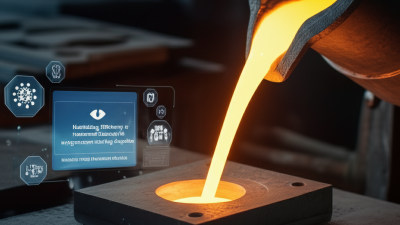
Investment casting is a precision manufacturing process widely used in various industries, including aerospace, automotive, and medical. This method involves creating a wax pattern, coating it with a ceramic shell, and then pouring molten metal into the shell. According to a recent market report by Smithers Pira, the global investment casting market is expected to reach $28.1 billion by 2025, driven by increasing demand for lightweight and complex components.
Quality control is crucial in investment casting. Manufacturers often face challenges in ensuring dimensional accuracy and surface finish. Reports indicate that defects such as porosity and incomplete filling can occur, impacting product reliability. Continuous improvement in materials and techniques is essential for overcoming these challenges. For instance, advancements in 3D printing technology have started to play a role in pattern making, enabling more intricate designs with fewer defects.
Moreover, sustainability is becoming a priority in investment casting. The industry finds ways to reduce waste and recycle materials. A study by the Investment Casting Society highlighted that around 20% of waste in traditional methods can be reclaimed through better processes. While the potential for innovation is significant, some manufacturers still struggle with implementing environmentally friendly practices. Addressing these issues requires a multi-faceted approach, embracing new technologies while maintaining product integrity.
Key Benefits of Investment Casting for Global Buyers
Investment casting offers numerous advantages for global buyers seeking high-quality products. This manufacturing process allows for intricate designs, which other methods may struggle to achieve. The precision it provides is notable. With investment casting, buyers receive parts that fit perfectly, reducing the need for additional machining.
Cost efficiency is another key benefit. While the initial tooling costs can be higher, the long-term savings are significant. This process minimizes material waste, which directly affects production expenses. As a result, manufacturers can offer competitive pricing to buyers worldwide. It's essential for companies to evaluate their production needs carefully, weighing the benefits against potential downsides like lead times.
Moreover, investment casting is versatile, applicable to various industries, from aerospace to medical devices. However, not every design is suited for this technique. Complexity can lead to issues. Buyers must collaborate closely with manufacturers. Open communication helps to refine designs for better outcomes. This proactive approach fosters reliability and ensures consistent quality across batches.
Top Industries Utilizing Investment Casting Products
Investment casting, known for its precision and versatility, serves a variety of industries. Aerospace is one prominent sector. Components like turbine blades and structural parts rely heavily on this method. These parts need to endure extreme temperatures and pressures. Investment casting ensures they are lightweight yet strong, meeting strict safety standards.
Automotive manufacturers also benefit significantly from investment casting. Engine blocks and transmission components are often produced using this technique. The detailing involved allows for complex shapes that reduce overall weight. However, not all designs translate smoothly into real-world parts. Each project reveals challenges that prompt engineers to reassess designs and materials.
Medical devices represent another key area utilizing investment casting. Products such as surgical instruments and implants require high levels of precision. The strict regulations in this industry demand reliable manufacturing processes. Each step must be meticulously checked to ensure device safety. Continuous improvement is essential, as the need for innovation grows. This keeps companies questioning and refining their casting techniques.
Best Investment Casting Products for Global Buyers
Criteria for Selecting Quality Investment Casting Suppliers
When selecting quality investment casting suppliers, several criteria can guide global buyers.
Material quality is a crucial factor. According to the "Global Investment Casting Market Report," over
75% of defects in finished products stem from inferior materials. Buyers should ensure that
suppliers use high-grade metals and alloys, as this directly affects the integrity of the castings.
Another important aspect is the supplier's manufacturing capabilities. The report highlights that companies with advanced
technologies have a lower defect rate, often below 3%. This includes the use of precision machinery and skilled
labor. An investment casting supplier should offer a range of services, from prototyping to mass production. Such versatility is
indicative of a supplier’s commitment to quality.
Finally, effective communication is key in any partnership. Suppliers must be responsive and transparent about their processes.
Poor communication can lead to misunderstandings and increased costs. Performance
metrics should be established to evaluate supplier reliability. Regular audits can help ensure compliance with industry standards.
These considerations can aid buyers in making informed decisions and mitigate risks associated with investment casting.
Emerging Trends in Investment Casting for Global Markets
Emerging trends in investment casting reveal significant shifts in global markets. The industry is projected to grow at a rate of 5.7% annually, driven by rising demand from automotive and aerospace sectors. Companies aim for lightweight components to enhance fuel efficiency while reducing emissions. This focus aligns with stricter regulations worldwide, pushing manufacturers to innovate.
Sustainability is becoming a priority. Businesses are exploring eco-friendly materials and processes in investment casting. Recent studies show that nearly 30% of manufacturers now utilize recyclable materials. This shift not only meets regulatory demands but also enhances brand reputation. Meanwhile, the rise of additive manufacturing techniques is influencing traditional investment casting methods, leading to a blend of approaches.
However, challenges remain. A shortage of skilled labor affects production capabilities. Many companies struggle to attract qualified professionals amidst an evolving landscape. Additionally, fluctuating raw material prices create uncertainties. Manufacturers must adapt strategies to maintain profitability while navigating these complex variables. Balancing innovation with operational efficiency is crucial.