Top 10 Benefits of Soluble Wax Investment Casting for Buyers?
The manufacturing landscape is evolving rapidly, and Soluble Wax Investment Casting stands at the forefront of this transformation. This innovative technique offers distinct advantages for buyers in various industries. According to a recent report from the American Foundry Society, the investment casting market is projected to reach $24.5 billion by 2027. This growth reflects a rising demand for precision components across sectors such as aerospace and automotive.
Soluble Wax Investment Casting delivers unparalleled accuracy and complex geometries. By using soluble wax patterns, manufacturers can create intricate designs without compromising quality. A study from the Metalworking Production & Processing magazine highlights that this method reduces material waste by up to 60%, promoting sustainable practices. Buyers must consider these benefits seriously, as cost efficiencies become key decision drivers.
However, like any technology, challenges exist. The initial setup costs may deter some buyers. It requires precise temperature control and specialized knowledge. As industries adapt, understanding both the benefits and shortcomings of Soluble Wax Investment Casting will be essential for informed decision-making.

Introduction to Soluble Wax Investment Casting
Soluble wax investment casting is a modern technique that offers several advantages. This method uses a soluble wax pattern to create precise molds. The wax melts away, leaving an exact space for the metal. It allows for intricate designs and fine details that are often difficult to achieve with other methods.
Many industries favor this casting technique due to its efficiency. The pattern's quick dissolution helps speed up production. This savings in time can be crucial in competitive markets. Additionally, the reduced material waste makes it an eco-friendlier option. Sustainable practices are increasingly important to buyers and manufacturers alike.
Challenges still exist in the process. For instance, temperature control is vital during the melting phase. Inconsistent temperatures can lead to defects in the final product. It's essential to refine techniques continually, as each casting presents unique variables. Embracing this mindset promotes a culture of improvement and responsibility in manufacturing.
Top 10 Benefits of Soluble Wax Investment Casting for Buyers
| Benefit |
Description |
Application Area |
| High Precision |
Allows for accurate production tolerances, enhancing product quality. |
Aerospace, Automotive |
| Complex Geometries |
Enables the manufacturing of intricate designs that are difficult to achieve with traditional methods. |
Medical Devices, Jewelry |
| Material Versatility |
Compatible with a wide range of metals, aluminum, steel, and precious metals. |
Manufacturing, Art |
| Surface Finish |
Provides superior surface finish reducing post-processing requirements. |
Consumer Electronics, Aerospace |
| Reduced Waste |
Minimizes material waste compared to traditional casting methods. |
Sustainability focused sectors |
| Rapid Prototyping |
Facilitates fast production of prototypes for testing and development. |
Product Development |
| Cost Efficiency |
Lowered production costs for high volume orders. |
High-demand Industries |
| Enhanced Strength |
Results in stronger end products due to finer grain structures. |
Structural Components |
| Flexibility in Design Changes |
Easier to make design alterations without significant tooling changes. |
Custom Products |
| Short Lead Times |
Faster setup and production times, increasing overall efficiency. |
Urgent Projects |
Enhanced Precision and Detail in Castings
Soluble wax investment casting offers significant advantages in precision and detail. According to a recent industry report, this method can improve dimensional accuracy by up to 95%. This high level of precision is critical in sectors such as aerospace and medical devices, where even minor discrepancies can lead to major failures.
The casting process allows for intricate designs and tighter tolerances. The use of soluble wax creates smooth surfaces, eliminating the need for extensive post-processing. A study revealed that companies utilizing this technology reported a 30% reduction in production time. This efficiency allows businesses to meet market demands more swiftly.
However, there are challenges. The initial investment in technology and training can be substantial. Additionally, the environmental impact of wax materials raises questions. As industries evolve, it is essential to balance innovation with sustainability. Ongoing research is needed to address these concerns while maintaining quality in castings.
Reduction in Material Waste and Cost Efficiency
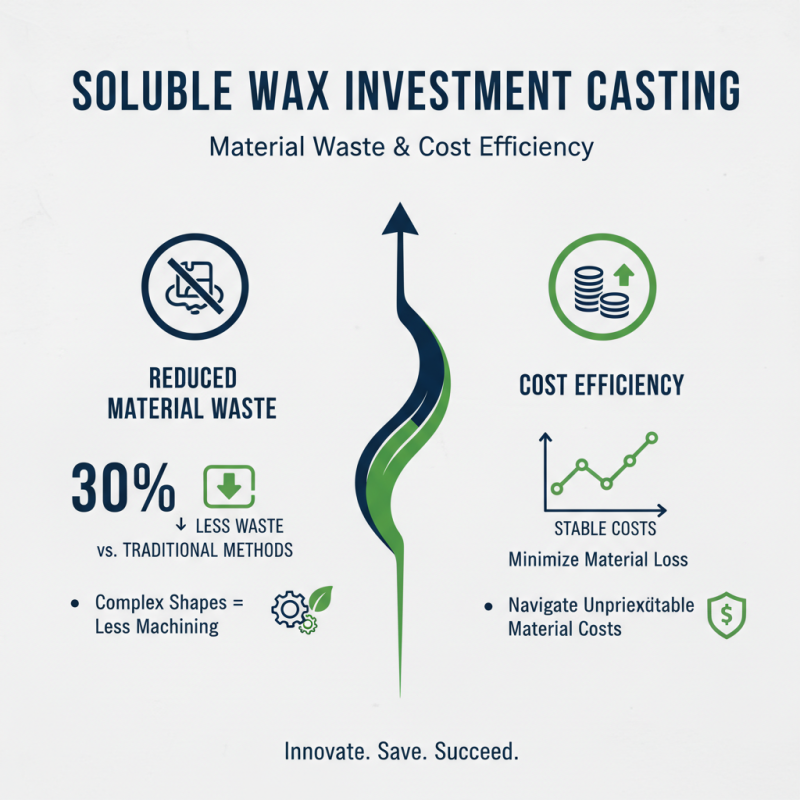
The reduction in material waste is a significant benefit of soluble wax investment casting. According to industry reports, this process can minimize waste by up to 30% compared to traditional methods. This efficiency is largely due to the unique design capabilities that allow for complex shapes. These intricacies often eliminate the need for additional machining, leading to even less material loss. This is crucial in an era where material costs can fluctuate unpredictably.
Cost efficiency is another critical advantage. A detailed study from the Manufacturing Institute indicates that companies utilizing this casting method have seen a 15% reduction in total production costs over five years. This reduction comes from decreased material use and lower operational expenses. Yet, this process may require a higher initial investment. Buyers must weigh these costs against long-term savings. It's essential to analyze each project’s specifics meticulously.
Adopting this technology does come with challenges. For example, not all designs may be feasible with soluble wax. The learning curve for new techniques can also slow production initially. However, the potential for reduced waste and costs often makes it worthwhile to address these hurdles. With proper planning and expertise, companies can navigate these issues effectively.
Faster Production Times Compared to Traditional Methods
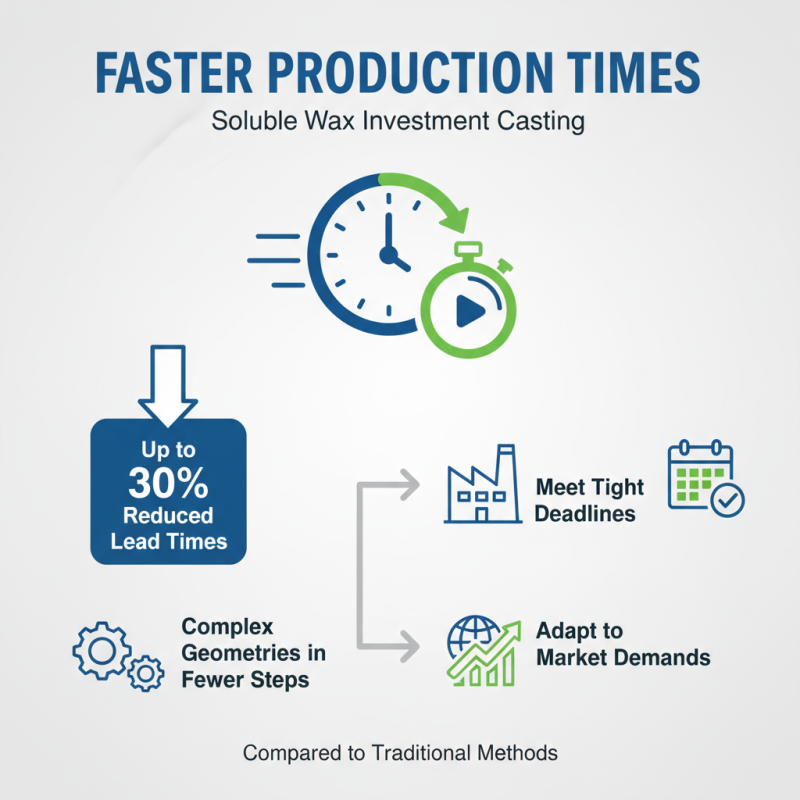
In the world of manufacturing, the speed of production can significantly impact a buyer's overall satisfaction. Soluble wax investment casting offers faster production times compared to traditional methods. Industry reports indicate that this technique can reduce lead times by up to 30%. This acceleration comes from the ability to produce complex geometries in fewer steps. As components can be created more quickly, companies can better meet tight deadlines and adapt to market demands.
Additionally, the intricate detail achievable with soluble wax provides another advantage. Traditional casting often struggles with fine features. However, soluble wax allows for higher precision. According to recent studies, parts made from this method exhibit a 25% improvement in dimensional accuracy. This precision reduces the need for extensive finishing, saving both time and costs. Yet, it’s essential to note that the initial investment in technology and training can be a barrier. Companies must weigh these costs against long-term benefits. Proper planning and skilled labor are crucial for optimizing this advanced technique.
Improved Surface Finish and Aesthetic Quality of Parts
In investment casting, soluble wax technology offers significant enhancements to surface finish and aesthetic quality. This method allows for intricate designs with smooth surfaces that can be visually appealing. The precision of casting minimizes the need for extensive finishing processes, thus retaining the original design's integrity.
When aiming for superior aesthetics, consider material selection carefully. Some materials naturally lend themselves to better finishes than others. Testing small batches can also lead to insights about how your chosen materials behave during casting. Pay attention to temperature control. Inconsistent temperatures can lead to defects that mar surface quality.
Another tip is to involve skilled operators in the casting process. Their experience can identify potential issues early. Regular inspections during the casting phase can catch surface imperfections before they become problematic. Keep in mind that while the soluble wax method excels, it’s not entirely flawless. Some trial and error may still be necessary to achieve the best results. Embracing these challenges can ultimately lead to higher quality parts with impressive finishes.